SABER is the single most common reason a shipment sits at a Saudi port with nothing wrong with it. The work belongs at the origin, weeks before the vessel sails — not at the quayside.
We see the same conversation several times a month. A container arrives at Jeddah, the documents are clean, the duty is calculated, and the declaration will not proceed because there is no valid conformity certificate. At that point the options are all bad: rush a certificate while demurrage accrues, re-export the goods, or in the worst cases destroy them.
Almost every one of those situations was avoidable. This guide explains what SABER is, which certificates you need, who is responsible for obtaining them, and the recent changes importers should be planning around.
SASO, SABER and SALEEM — what each one is
The three names get used interchangeably, which causes real confusion. They are different things.
- SASO — the Saudi Standards, Metrology and Quality Organization. The regulator. It writes the technical regulations that products must meet.
- SALEEM — the Saudi Product Safety Programme. The overall framework under which conformity is assessed.
- SABER (saber.sa) — the online platform. It is where products are registered and where conformity certificates are issued. SABER is not a certification body; it is the system through which accredited bodies issue certificates.
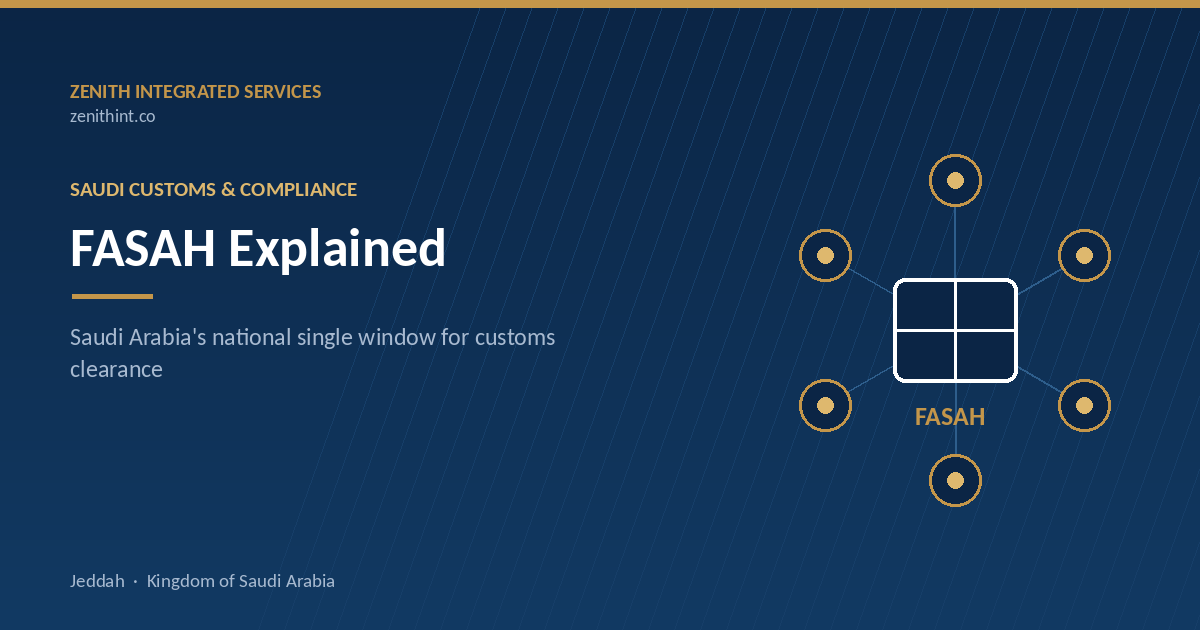
Put simply: SASO is the "what", SABER is the "how". The platform has been mandatory since 2019 and has been integrated with FASAH, the national customs single window, since 2020 — which is why a missing certificate stops a customs declaration automatically.
The two certificates you need
| Product Certificate of Conformity (PCoC) | Shipment Certificate of Conformity (SCoC) | |
|---|---|---|
| What it covers | The product model itself — proof that it meets the applicable Saudi technical regulation. | One specific consignment — proof that what is in this shipment matches the registered product. |
| Validity | Typically up to one year, depending on the product category. | One shipment only. A new certificate is needed for every consignment. |
| Issued by | A Conformity Assessment Body (CAB) accredited by SASO, based on test reports and technical files. | Issued through the platform against a valid PCoC. |
| When to obtain | Before the first shipment of that product. Renew before expiry. | Before the goods arrive in the Kingdom — ideally before they are shipped. |
| Needed for customs? | Indirectly — no PCoC means no SCoC. | Yes. This is the certificate customs checks against your declaration. |
For products not subject to a specific technical regulation, the importer can self-declare conformity in the platform by entering the product details and attaching the technical documentation, after which a shipment certificate can still be obtained. Non-regulated does not mean no registration — that is a frequent and expensive misunderstanding.
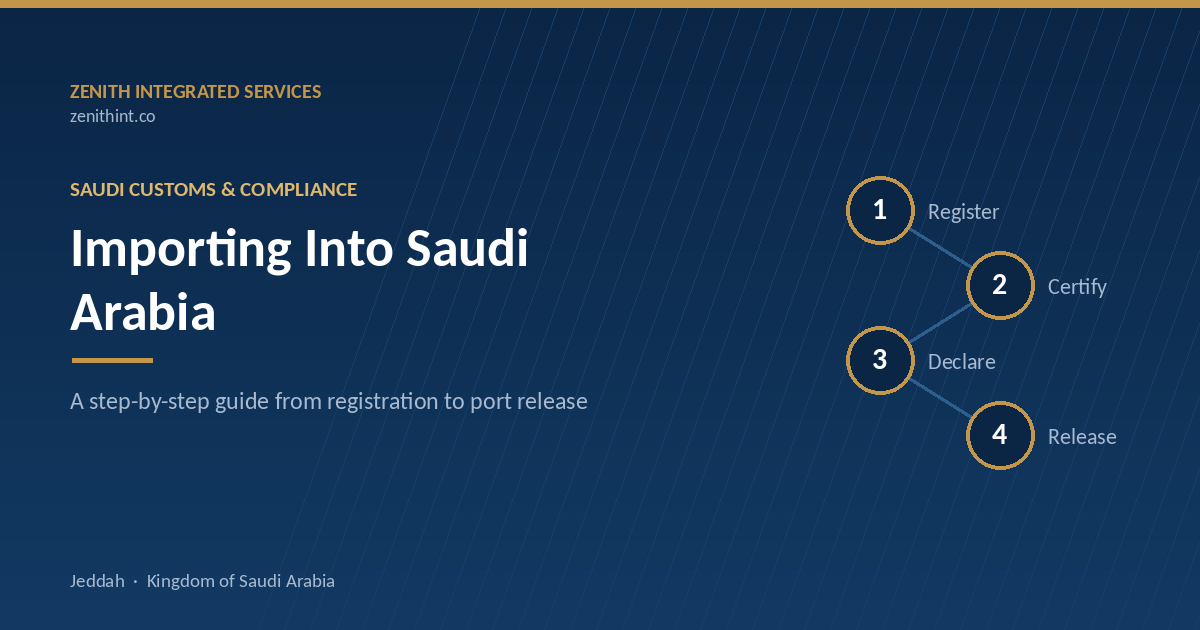
The process, step by step
- Confirm whether the product is regulated. This is determined by the product category and its HS classification, not by your own view of how technical the product is.
- Register the product in SABER. Factory details, country of origin, model numbers, technical specifications and product photographs.
- Appoint a SASO-accredited Conformity Assessment Body. The body reviews the technical file and test reports.
- Obtain the Product Certificate of Conformity. Check that the product description on the certificate matches the description you will use on your commercial invoice, word for word.
- Obtain the Shipment Certificate of Conformity for each consignment, matching quantities and invoice details.
- Ship, then declare. The certificate is checked automatically against your customs declaration.
The certificate must match the invoice. Not approximately — exactly. Different model suffixes, different quantities or a different description are enough to hold a shipment.
Costs and timelines
Platform fees are modest — commonly in the region of a few hundred Saudi riyals for a product certificate and a smaller amount per shipment certificate, excluding VAT. The real cost is the conformity assessment itself, which depends on the product, the applicable regulation and whether valid test reports already exist.
Timelines vary just as widely. A product with complete, current test reports from an accredited laboratory can be registered and certified within days. A product that needs new testing can take several weeks. That gap is exactly why the certification work belongs at the start of the procurement cycle, not the end. Confirm current fees with your conformity assessment body, as published rates are periodically revised.
What changed recently — and what to plan for
- Shipment certificates now apply across the board. The requirement for a shipment certificate was extended beyond regulated products, so self-declared and non-regulated goods also need one. Importers who last checked the rules several years ago are frequently caught by this.
- Additional pre-approval for certain product categories. For products falling within specified appendices of SASO circulars, an approved product declaration from the relevant ministry is required before a shipment certificate can be issued. If you import industrial or construction-related goods, verify your categories with your assessment body.
- Tighter data matching. Integration between the conformity platform and customs means discrepancies are caught automatically rather than negotiated at the counter.
Because these requirements are revised periodically, treat any published list — including this one — as a prompt to verify rather than a final answer. Confirm your specific product categories before each new product launch.
Who is responsible — importer or supplier?
The SABER account belongs to the Saudi importer. That is a legal and practical point: you cannot outsource the account, and your company is the party on record. What you can and should do is push the technical work upstream. Your supplier holds the test reports, the specifications and the factory data. Build the requirement into your purchase order so the technical file arrives with the pro forma invoice, not after the goods are produced.
For regular importers, the most effective arrangement we see is simple: the importer holds the account, the supplier is contractually obliged to provide the technical file, and the forwarder or broker checks the certificate against the invoice before the booking is confirmed.
Six SABER mistakes that cost importers money
- Assuming the supplier has handled it. Suppliers outside the Kingdom often have no account and no obligation unless you gave them one.
- Leaving the shipment certificate until after departure. The certificate is quick only if the product certificate already exists.
- A product description that does not match the invoice. The most common single failure point.
- An expired product certificate discovered mid-shipment. Track expiry dates like you track insurance renewals.
- Treating non-regulated goods as exempt from the platform entirely.
- Choosing a conformity assessment body on price alone, then discovering it is not accredited for your product category.
How Zenith handles this for clients
We check conformity requirements at the quotation stage, not at the port. When you send us a commodity and an HS code, our customs desk confirms whether the product is regulated, what certificates will be required, and whether what your supplier is offering will actually satisfy customs.
For clients moving regular volumes, we build the check into the booking process for ocean freight into Jeddah, so a shipment is not confirmed until the certificate position is clear. Where goods do arrive with a compliance problem, warehousing and bonded storage can sometimes buy time while the position is resolved — but it is always the expensive option.
Frequently Asked Questions
What is SABER certification?
SABER is the Saudi online platform, operating under SASO, where importers register products and obtain the certificates of conformity required before goods can clear customs. The two certificates are the Product Certificate of Conformity (PCoC) and the Shipment Certificate of Conformity (SCoC).
Do all products need a SABER certificate?
In practice, yes — commercial consignments need a shipment certificate. Products subject to a technical regulation additionally need a product certificate issued by an accredited conformity assessment body. Non-regulated products can be self-declared in the platform but still require registration and a shipment certificate.
What is the difference between PCoC and SCoC?
The PCoC certifies the product model and is typically valid for up to a year. The SCoC certifies a single consignment and must be obtained for every shipment, even where the same product already holds a valid PCoC.
How long does SABER certification take?
It depends entirely on whether valid test reports exist. With complete documentation, certification can be completed in days. Where new testing is required, allow several weeks. Start the process during procurement, not before shipping.
Who obtains the SABER certificate — the importer or the exporter?
The account and the legal responsibility sit with the Saudi importer. The exporter or manufacturer supplies the technical file, test reports and product data. Build that obligation into your purchase terms.
What happens if goods arrive without a valid SABER certificate?
The customs declaration will not proceed, and the shipment accrues storage and demurrage while the position is corrected. Depending on the product and the reason, the outcome can be a late certificate, re-export at the importer's cost, or in serious cases destruction of the goods.
Written by the Zenith Customs Desk — our licensed customs brokerage team in Jeddah, handling conformity and clearance for importers across pharmaceuticals, FMCG, industrial equipment and retail.
- SABER
- SASO
- Conformity
- Customs Clearance
- Saudi Arabia
- Import Compliance